Posts tagged ‘jen wanous’

June 27, 2011

Working Together to Create a Memorable Meal

by Jen Wanous

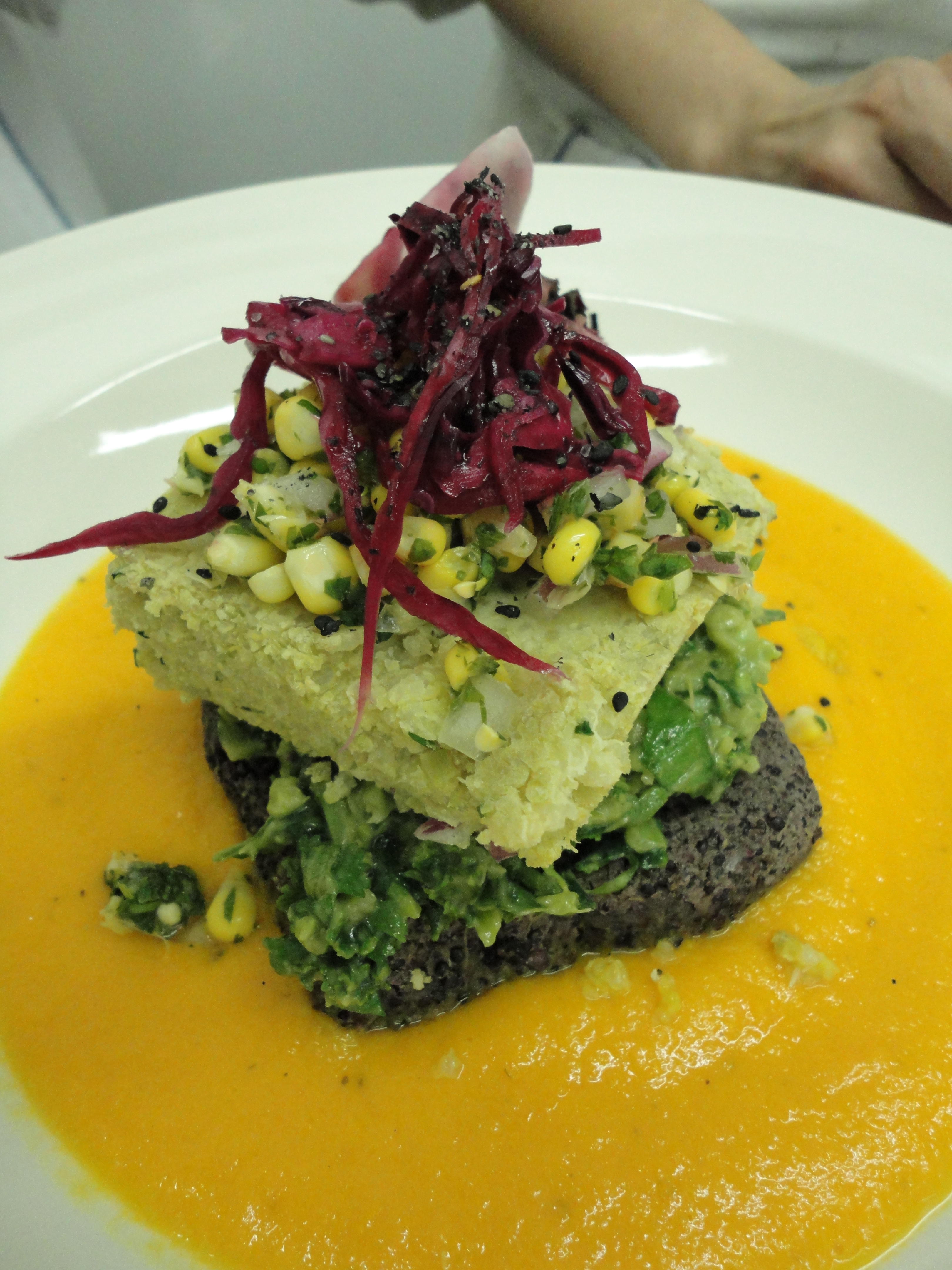
A Japanese and Peruvian fusion meal was the culminating experience of my culinary education, thus far.  As part of our final, our culinary cohort of eight had to plan a dinner for 100.  The dinner ran smoothly and Annie even ate the seaweed and cherry spring roll.  Coming from the event planning world, I know that these types of gatherings take a lot of front loading. The pay offs are all in the smiles of your guests, as you stack chairs and save flower arrangements.

As the co-team leader of the group, I had the tricky job of facilitating consensus, or at least majority  (as the NY State Senate can attest, it is a possible task).  With eight refined and diverse pallets, we managed to come up with a sophisticated and flavorful meal for our guests.  Through the process, I was reminded of some basic yet profound approaches to working with others.  Although it is a struggle to follow these guidelines at all times, they have helped me to keep perspective in a wide array of situations.

1.  Have integrity with what you say.  Avoid gossiping and say only what you mean.

2.  Don’t take anything personally.  Nothing others do is because of you.  You never know what someone is dealing with from their past, or even what just happened that morning for them.

3.  Don’t make assumptions.  Express what you really want and communicate clearly with others to avoid misunderstandings.

4.  Always do your best.   You can always do your best. This applies to the hard stuff as well as simply taking good care of yourself.

These are adapted from the Four Agreements, by don Miguel Ruiz.  You can find the book by clicking here.  

Here are some pictures of our team on the night of the dinner.

Citrus Salad with Daikon

This salad was served as an appetizer for our dinner.  Its tangy sweetness is the perfect light pallet pleaser for summer.  If you don’t feel up for the pickle, just leave it out.  Enjoy!

Pickle:

1/4 pound daikon, thinly sliced

1/2 cup golden balsamic (or apple cider vinegar)

1/2 teaspoon salt

Salad:

1 pink grapefruit

2 oranges

1 fennel, very thinly sliced

1/4 pound micro greens

Dressing:

1 lemon, juiced

1 teaspoon dijon mustard

1/4 cup olive oil

salt and pepper to taste

1.  Place daikon on a paper towel and salt generously.  Set aside for about 45 mins.  Blot dry, in a small bowl, add vinegar and salt, set aside for at least an hour, preferably overnight.

2. Peel and thinly slice grapefruit and oranges into 1/8 inch thick round circles.

3.  Make the vinaigrette by combining the lemon and mustard and slowly drizzling in the olive oil while whisking.  (remember the slow drizzle while whisking is key to a good dressing. ;)

4.  Toss the micro greens with the dressing to coat.  Lay out the the slices of grapefruit and orange, layer with the fennel and pickled daikon.  Top with the dressed micro greens.

June 21, 2011

A Cookie Like Me

by Jen Wanous

This week, I celebrated my birthday.  It was to be a low-key event…but it turned into a very memorable one that lasted for days.

The lead up to my birthday actually started out as a big bummer when my bike was stolen.  As with most obstacles in my life, I tried to look for the silver lining.  Turns out, it was right under my nose within the reach of my friends and family.  I had the thought to reach out to my community to ask for support by setting up a birthday/bike fund.  The response I received was touching.  From five dollars to fifty, from inquires of concern and support, to offering their neighbor’s unused bikes–people gave generously.  It is hard sometimes to ask for help but it was good practice for me.  I was heartened by my community’s support.

My actual birthday fell on a school day.  It was our Raw Foods day and at first, I was not so excited about this.  However, it was actually a very delicious day–complete with cake and ice cream (well, raw brownies and fruit sorbet).  I brought along some vegan cookies to share with my culinary school friends who are vegan.  After some thought, I decided that these cookies are a lot like me; it makes the best out of what it has and it’s sweet, exudes calm and has a sprinkling of saltiness.  The recipe is below.

My birthday was punctuated by the best dinning experience I’ve ever had.  Annie treated me to a dinner at Blue Hill Farms.  This is a farm and restaurant an hour outside of New York City.  We saw deer frolicking and lightning bugs against the rolling crop lined hills.  Needless to say, this really impressed our city-slicker eyes.  They have a five course “farmer’s tasting” menu which leaves you in the masterful hands of the chef.  Each course offered seasonal awe and impressed us with its presentation.  A dinner highlight of a poached and fried egg that was perfectly circular when plated in pea soup and broke into a gooey goldenness.  Of course, Annie was cringing as she watched me eat this because she does not appreciate peas nor raw egg.  Luckily, there was plenty of other samplings to keep us both full and happy.

This birthday leaves me with a deep sentiment of gratitude to the many people who helped make this birthday a memorable one.  Even the person who, (as my friend Kristina said) “infinitely borrowed my bike”, had something to offer me this year.


Lavender Sea Salt Cookies

Yields 25 cookies

1/2 cup Earth Balance Spread (or one stick butter)

1/2 cup sugar

1 egg replacer or egg

1 cup flour

1/2 teaspoon baking powder

1/4 teaspoon salt

2 teaspoons edible lavender flower (find at your local farmer’s market)

zest of one orange

1/2 teaspoon corse sea salt for sprinkling

1. Preheat the oven to 350.  Prepare two baking sheets either with a silpat pad or with light oil.

2. In a medium bowl, cream together the butter and sugar.  Add in the egg (replacer).  Mix well.

3. In a separate bowl, mix the flour, baking powder and salt.

4. Add the flour mix to the butter/sugar until just combine.  Gently incorporate the lavender and the orange zest.

5. On prepared baking sheets, scoop out 1 teaspoon sized balls and top with a hearty pinch of sea salt.  Bake for 7-10 minutes.  Remove from sheet and cool on a rack.


June 13, 2011

Health and Well-being: The Spiritual Side of Culinary School

by Jen Wanous

It’s hard to believe, but this is my last month of school.  The heat has really been turned up as I have been preparing for our final dinner for 100 guests and have been working in some of NYC’s top kitchens, trying to secure an internship.  Long days that turn into nights have me delirious and wobbly on my feet.  Yes, I love to be working with food…but it is dang hard work!  Through all of this, I have come to rely on some unlikely lessons I have recently learned in school to get me through.

A big component of our curriculum at school is food and its link to health.  We have gone over the basics in nutrition and have also gone deeper with different theories of healing through food.  Macrobiotic is an approach to physical and emotional wellness through food and philosophy.  Below, I have outlined the ten conditions of health according to the founder of macrobiotics, George Ohsawa.

Getting a solid night’s sleep and gently practicing the other conditions have really helped me get through this grueling time.  In alignment with the ninth condition, I would like to thank you all, who read my blog and support me in following my passion.  I hope that you too can find health and well being through taking good care of your body and mind.  You are certainly worth it.

Ten Conditions of Health

1.  Good appetite.  Things that might interfere with this are caffeine, snacking, skipping meals, too much sugar and alcohol.  Also, don’t eat when you are worried or angry.

2.  Good sleep.  What time do you need to go to bed to get eight hours of sleep?  Avoid late-night eating; try not to eat three hours before bed.

3.  No fatigue. Pace yourself and listen to your body when it needs rest.  When you start to feel sick or you injure yourself, slow down and take it easy.

4.  Good memory.  The very basic of this ensures our survival.  Remember how you felt the last time you ate something.

5.  Good humor. Don’t take yourself or life too seriously.

6.  Precision in thought and action. 

7.  Honesty.  Be honest with yourself and others.

8.  Humility.  Be open to not knowing and to learning.  It is okay to not know something.

9.  Gratitude.  Have trust in the universe that there is an infinite amount of abundance.  When you start appreciating the good things, even small, more good will come.

10.  Love.  First yourself, and then others.  Accept yourself as you are and be open to this connection with others.


To learn more about macrobiotics, follow this link.

May 29, 2011

Meat and Greet: Welcome to Grilling Season!

by Jen Wanous

Happy Memorial Day Weekend!  In honor of the christening of summer, and of my bestie, Bridgie’s b-day today, this post is on her favorite grilled goodness: ribs.  I know, fire and raw meat can be scary, but don’t be afraid, YOU can do it!  Light up that barbie and get the the choicest cuts this summer, your taste buds will thank you.

This week, I took a pig butchering class.  I thought it would be a good to balance my resume given my mostly vegetarian culinary training.  Plus, pork is my favorite meat product and it’s time that we properly met.

When I walked into the class, they had cozies and cans of Bud waiting.  Half a pig was splayed out on a stainless steel table and a pack of giddy Wall Street guys were beside themselves with anticipation.  I was less emotionally moved by the half carcass than I thought I would be. More intriguing was discovering the exact location where bacon and lard live.  Hand-held hack saws were used and two very sharp knives.   The two cans of Bud I had downed by the middle of the class made it all seem more like a fun butchering party than anything else.  Following the natural arcs of bone structure and muscles made for a surprisingly easy deconstruction of this 120 pound pig.

With the sanitized industrialization of food production, we have become so disconnected from the source of our food.  We are used to our boneless, skinless chicken breasts in styrofoam plastic-wrapped perfect portions.  We get grossed out by meat product that resembles what it looks like in life and we are paralyzed by the risk of contamination.  Be brave my friends, get different cuts of meat and be creative in how you cook it.  Of course, grilling is one of the best ways to bring some cuts of meat to their prime glory.

There are several different types of ribs to get.  Country Style Ribs are the meatiest consisting of the rib end of a pork loin.  Spare Ribs have great flavor, a good balance of fat and meat and are therefore loved by BBQ enthusiasts.  They are the large ribs that you would usually picture at a BBQ.  They require a low heat and slow cooking method.  Baby Back Ribs are smaller and have a pronounced curve to them. They are not as fatty as spare ribs and for that reason require less cooking time.  They are more expensive then spare ribs and if over cooked can turn out tough.  St. Louis Cut Ribs are often confused with baby backs but they are less curved and have more fat and meat on the bone.

Get the highest quality of meat you can afford.  Even if you have to sacrifice quantity, your body and environment will thank you.

Here is a link to a website that will walk you through step-by-step on how to BBQ ribs with your charcoal grill.  Click here.

May 23, 2011

A Quick Pickle: Veggies and Ginger

by Jen Wanous

My school’s equivalent of a thesis is a dinner that our class crafts from start to finish for 100 people. In preparation for this event, I have been testing out different pickling recipes for a preliminary tasting at school tomorrow.

I don’t know about you, but for me pickling seemed like this mysterious process that somehow kept things consumable for a really long time and turned out some salty vineagary  goodness.  I wasn’t sure exactly how this happened though.  With a little Googling, I came to find out that it is really quite a simple process and, like most good food, it just takes a little bit of forethought.

Along the way, I also discovered that pregnant women crave pickles for a reason!  It’s not just an old wives tale.  Fermented foods contain a naturally occurring chemical called tyramine that acts as a stimulant for hormonally charged pregnant women.  Also, fermented foods are good for people who are dealing with depression.

Below are two recipes for pickled products.  One is for wasabi pickled veggies and the other is for pickled ginger (which we all know and love from sushi restaurants).  Enjoy these pickled condiments on your next burger, sandwich, or as a garnish for any plate.

Wasabi Pickled Veggies

Equipment you will need:

  • Large pot
  • Glass jars and lids
  • Tongs
Ingredients:
  • Veggies (carrots, radishes, onion, peppers, etc)
  • 5 cloves garlic
  • 1 Tablespoon salt
  • 4 Tablespoons sugar
  • 1 cup apple cider vinegar
  • 1/2 cup white vinegar
  • One lime, juiced
  • 1 Tablespoon wasabi powder
  • One bay leaf
1.  Prepare your jars by first sanitizing them.  Bring a big pot of water to a boil and add your glass jars and lids.  Boil for 15 minutes.  Use tongs to carefully remove.
2.  Deseed peppers and slice all your veggies.  Put them in the jar, as full as possible.
3.  Combine the salt, sugar, vinegars and lime juice in a pot.  Bring to a boil, until all the sugar and salt is dissolved.  Add wasabi powder and bay leaf.
4.  Pour over veggies in the jar.  Make sure the liquid covers everything.  Add the lid.  Let it come to room temperature and then store in the fridge.  They will taste best 3-4 days later and can keep for months.  (Just make sure the liquid is always covering the veggies.)  Yields about 14oz.

Easy Peasy Pickled Ginger

Instead of spending $5 on this at the store, make some at home!  This recipe makes a small 4oz jar.

Ingredients:
  • 3 inch fresh ginger
  • 1 Tablespoon salt
  • 3 Tablespoons sugar
  • 1/2 cup brown rice vinegar
1.  Sanitize the jar and lid by boiling in water for 15 minutes.
2.  Peel ginger and slice thin, or cut little matchsticks.
3.  Add the salt to the ginger, toss and set aside for an hour.  Then blot with a paper towel to remove excess moisture.  Put ginger in the jar.
4.  Bring the sugar and vinegar to a boil until the sugar is dissolved.
5.  Pour liquid over the ginger in the jar to fill to the brim.  Put lid on.  Let it come to room temperature then put in the refrigerator.  Use after 3-4 days and keep for months!
May 16, 2011

The Beatuy and Glamor of Culinary School

by Jen Wanous

After shelling fava beans for hours, fingers wrinkled and back sore, this Cinderelli was able to go to the ball.  And what a ball it was!  The James Beard Award gala is the Oscars of the culinary world.  No expense was spared.  With a black tie dress code and food from some of the best chefs in America, I was was wowed by the glitz and glamor of the evening.  The chef from my prospective internship, Gabrielle Hamilton took Best Chef of New York City!  In her acceptance speech she said,  “All you have to do is open a can of sardines and a box of Triscuits, call it a signature dish, and you get Best Chef New York City.”  Another reason why I think this woman is so awesome.  Even after winning best chef of New York City, she abstained from pretentiousness.

My date, Annie and I indulged in some of the 30 odd dishes available –  a smorgasbord of gourmet samplings from the top chefs in the country.  I smiled when I saw the smoked sea scallops and fava beans.  The day before I had worked with chef Timon Balloo of Sugar Cane restaurant of Miami to prepare that dish.  I told Annie and every other person in earshot , that I shelled those favas!!  I was proud to be a part to the event from the inside out.  As an Events Manager prior to starting culinary school, I was often on the inside of events, rarely able to enjoy them.  This time though, I was able to have the inside scoop and be able to fully partake and appreciate what exactly went into pulling an event like this off.   Back to the food:  we had caviar on prosciutto, octopus carpaccio, pulled pork on grits, salmon sashimi…and the top distilleries were handing out the latest cocktail concoctions.  Big ice cubes were all the rage and we enjoyed a Hendrick’s Gin drink poured over one of the giants.  We made small talk with the co-owner of the Spago chain and nodded a hello to Jacues Pepin.  It’s fun to be famous!

Meanwhile, back at school, we had a week of baking.  From cakes to pies to cookies, we rolled out some beautiful gems of sculpted sugar.  We learned how to make most treats vegan and some even gluten-free.  They all were delicious.  Stay tuned for a gluten-free baking post.

May 9, 2011

Special of the Day: Soft Shell Crabs

by Jen Wanous

While upstairs in the kitchen, during a busy 7pm dinner rush, Mashama asked me to get the soft shell crabs for her. I thought this would be a simple task, like fetching the garlic chives or the Serrano peppers I had brought up earlier. In the cool recess of the refrigerator walk-in, I saw the large plastic bin labeled “Crabs; Be Careful!” with little ventilation cuts takes taken out of the top.  Seeing those, I quickly put together that these soft shell crabs were still living! Suddenly, a little guy inside the box flailed its pinchers at me. Certainly, I wouldn’t be killing these crustaceans. I would just go up stairs and let them know that they had not been prepared and someone else would do it because I hadn’t a clue of how to.

Back upstairs, Mashama told me to bring her a crab so she could show me how to prepare them. With a snip of the sharp kitchen scissors, the crab’s face, butt, some of its shell and part of its inner workings were gone. She held them with such confidence and ease that I took the box of 14 wiggling crabs downstairs, each step telling myself that it would be okay, that I just had to do it, it wasn’t a big deal. With scissors in hand, I went to grab for the first one and it grabbed back! I flinched and might have squealed out loud too. I was so glad that no one else was downstairs to watch me freak out. And there, on the sanitary, industrial steel tables, I took a deep breath and snipped the face off of the first crab. Of course, it wiggled a bunch, and I dropped it, so I had to pick it up again and cut its tail off, then the pokie parts of its shell and then pull up the flaps of its sides to scrape out the gills. Its eyeball cavities oozed grey and green gelatinous substances and even with its face off, it still was flailing about. At first I was afraid that it would pinch me but then I realized that the claws weren’t actually grabbing anything, probably because of their small, pre-exposure-to-a-rough-life-to make them hard shells.

To get through the rest of the 13, staring googily-eyed in front of me, I started things like, “You were such a good crab. I’m sorry I have to cut your eyes off now. Thanks for being so big, someone will really love eating you.”  And other things, some even in a whisper, out loud, to myself, “You can do this. Only 10 more.”  My heart was racing and tight. It was comforting to remember that the owner of this restaurant (the person who essentially bought these crabs) had recently written a book telling about her first experience killing a creature. It was a chicken and she told about how hard it was and the delicate balance of life and death. It was deep. And here I was, in her kitchen, channeling her courage and before I knew it, the 14th tail had been chopped off and I was done! I marched my way upstairs, so proud of myself, arms extended, chest puffed and Mashama took them with a quick “Thanks.” and went on, in the fiery heat of the sauté station to make the seven orders in front of her.

_____________________________________________________________

Prune is the restaurant where I hope to do my culinary school internship. The owner, Gabrielle Hamilton is nominated for Best Chef at tomorrow night’s James Beard Awards (the Oscars of the food world). Her book is called, “Blood, Bones and Butter”.

May 1, 2011

Strawberries on the Cheap: Things to Consider When Buying Food

by Jen Wanous

If you know me, you know that I love a good bargain!  That’s why, the other night, when I saw a guy selling strawberries off of a card table for a buck on the side of the street, I got two!  Of course, these ripe spring jewels were not of the organic variety – those cost $6 at my local food coop.  Every time we make a food purchase, we are confronted with ethical, nutritional and financial decisions.  This time, for me, the financial component took precedence, but it doesn’t always.  Below are some things that I consider when choosing food.  Next time you are at the grocery or at a makeshift fruit stand on the side of the street, you can consider these things too.

Is it local? 

Is it organic?

Does it look ripe and fresh? 

Price? 

I put local at the top of my criteria because buying local supports your local farming community, reduces the carbon footprint by cutting out shipping fuel and ensures that you’ll be eating fresh, seasonal food.  Your local farmer’s market will have a great selection of food that is grown within 150 miles and Whole Foods is stepping up its game now by sourcing products locally too.

Organic means that the food has been certified to be free of pesticides, chemical fertilizers, does not contain genetically modified organisms and is not subjected to irradiation.

Okay, this is quite the package to unpack, but here are some highlights:

Pesticides and chemical fertilizers keep the bugs off but poison the consumer and the environment.  The runoff from farms pollutes our waters and has health risks ranging from mild skin rashes to more significant environmentally-derived health problems like cancer and birth defects.

GMO food has been messed with on a genetic level.  We are talking DNA here.  Scientists, paid by monopoly seed producers and pesticide producers (like Monsanto) go into the DNA of a seed and change it to be resistant to chemicals or bugs, or anything.  The effects of DNA splicing in the food we ingest has unforeseen consequences.  Do you really want to eat food that has genetically modified DNA?

Irradiation is something that I had not heard about before I started culinary school.  I was amazed to discover that most of the non-organic food that we get in grocery stores has been exposed to low levels of radiation.  It is used to increase shelf life by killing bacteria, viruses and insects on food, including meat.  This process of exposing food to radiation has many drawbacks. Some of these possible issues are that it masks food that could be spoiled, it impairs flavor and, hello, we are eating food that’s been exposed to radiation.

All this being said about organic foods, we still have to consider that a healthy adult person has the immune capacity to deal with some non-organic products.  It’s not a must to buy all organic, just try to.

Here is a list of the “dirty dozen”, which are foods that you want to get organic, if possible:

1. Meat

2. Milk

3. Coffee

4. Peaches

5. Apples

6. Sweet bell peppers

7. Celery

8. Strawberries

9. Lettuce

10. Grapes

11. Potatoes

12. Tomatoes

Here is a little tip when buying produce to tell what you’re getting. 

We all see them and peel them off whenever we eat a piece of fresh fruit.  They are the stickers with numbers and they have a secret code so that you can tell what you are buying.

–  4 digit number means conventional (grown with pesticides and chemical fertilizers)

–  5 digit number and starts with a 9 means organic

–  Starts with the number 8, then it’s been genetically modified

To find out more about organic food, you can check out:

Food Inc. (movie)

The Future of Food (movie)

The Ethical Gourmet by Jay Weinstein (book)

Unhappy Meals by Michael Pollan (NY Times article)

Organic Food, pesticides, chemical fertilizers, genetic modification, irradiation, all on Wikipedia.

April 25, 2011

Woman with a Knife! (and other fun things like how to cut an onion)

by Jen Wanous

One of the things I was most excited to learn about in culinary school was how to use a knife.  There is something so hot about wielding a dangerous instrument, executing a task with effortless precision.  I wanted to be that Wonder Woman that can fillet a fish and stop a bullet cold.  With back to back classes on how-to, I started to build my repertoire of julienne, bruniose, chiffonade and other fancy French cuts.  Last week I cut 14 pineapples into a small dice in preparation for a dinner serving 100 people at which I worked.  It took me about four hours to do so, my hands smelled sweet for a whole day after and I was dang proud of my symmetrical tiny pieces.

An onion is something we all cut often.  It saves so much time to have a method of how to cut one properly.  Below is a video on how I cut an onion.  Enjoy the video!  xo

Here are a few tips to keep in mind:

1. Always use a sharp knife.

2. To avoid tears while cutting, chill the onion for 10 mins.

3. Keep your fingers tucked back behind your knife–even your thumb.


April 11, 2011

Ode to New York: A Vegan Ice Cream Guide

by Jen Wanous

On my third year anniversary of living in New York, I would like to dedicate an ode to the best vegan ice cream this wonderful city has to offer.  Many of you know that I am lactose-challenged and as you probably also know, I love ice cream.  This makes for a challenging scenario, but with some digging, sweet, cool, creamy deliciousness can be found!  Below are reviews of what I have enjoyed here.

Right photo courtesy of Kelsey Leland, check out her blog at: http://www.girlwiththecupcaketattoo.com/

You see, I used to be able to eat dairy like a champ.  Hot days at the beach in my Southern California hometown would never be complete without some Thrifty’s ice cream, pizza was plentiful and cheddar cheese to complement all the Mexican food was essential.   Then came college and my earthy-herbal vegan days where I cut out dairy completely.  When I decided I was over it, I tried to go back to my decedent milkshake-loving ways and I quickly realized that I was doomed!! It was a particularly low point in my life.  I had indeed become lactose intolerant- joining the ranks of my mom’s side of the family- we would all pay dearly for our cheesecake indulgences on Thanksgivings.

It’s estimated that 75% of adults in the world are lactose intolerant. Your body is missing lactase, which is the enzyme you need to digest lactose.  Prior to pasteurization, milk contains lactase but the high heat process of pasteurization destroys it, making it hard for us to digest if we don’t already produce lactase.  If you can find a trusted local, raw milk producer, you might not have any reaction at all.  (In NYC, it is illegal to sell non-pasteurized milk…but ask around someone might be able to hook you up!)

Lactose intolerance is the heavy, stomachachey feeling you get from eating pizza, cream soup or ice cream.  (Lots of bubbles…you know what I’m talking about.)  Of course, the severity can vary.  If you tune into your body enough, you can start to notice what might bother you the most.  The sugar-lactose combo that is found in ice cream is particularly challenging for your body to digest.  It might be worthwhile to pay attention to any correlations you notice between symptoms like: stuffy nose, you have to clear your throat a lot (ehem), for kids- if they get ear infections often, asthma, snoring or just tummy aches in general.  It might not seem like such a big deal but over the years, I’ve noticed that I get totally grumpy when my stomach hurts, so for me it’s just not worth it to suffer through—especially when there are so many wonderful alternatives!

read more »